Archives
- 2026-05
- 2026-04
- 2026-03
- 2026-02
- 2026-01
- 2025-12
- 2025-11
- 2025-10
- 2025-09
- 2025-03
- 2025-02
- 2025-01
- 2024-12
- 2024-11
- 2024-10
- 2024-09
- 2024-08
- 2024-07
- 2024-06
- 2024-05
- 2024-04
- 2024-03
- 2024-02
- 2024-01
- 2023-12
- 2023-11
- 2023-10
- 2023-09
- 2023-08
- 2023-07
- 2023-06
- 2023-05
- 2023-04
- 2023-03
- 2023-02
- 2023-01
- 2022-12
- 2022-11
- 2022-10
- 2022-09
- 2022-08
- 2022-07
- 2022-06
- 2022-05
- 2022-04
- 2022-03
- 2022-02
- 2022-01
- 2021-12
- 2021-11
- 2021-10
- 2021-09
- 2021-08
- 2021-07
- 2021-06
- 2021-05
- 2021-04
- 2021-03
- 2021-02
- 2021-01
- 2020-12
- 2020-11
- 2020-10
- 2020-09
- 2020-08
- 2020-07
- 2020-06
- 2020-05
- 2020-04
- 2020-03
- 2020-02
- 2020-01
- 2019-12
- 2019-11
- 2019-10
- 2019-09
- 2019-08
- 2019-07
- 2019-06
- 2019-05
- 2019-04
- 2018-07
-
br Conclusions In sum enhanced incentive motivation in obesi
2024-03-19
Conclusions In sum, enhanced incentive motivation in obesity-prone rats is mediated by NAc CP-AMPARs. These neurobehavioral differences may render obesity-susceptible populations more sensitive to the motivational influence of food cues, producing more intense, focused, “wanting” that may limit t
-
br The lipoxygenase pathway in diseases of the nervous
2024-03-19
The 12/15-lipoxygenase pathway in diseases of the nervous system Conclusions and future perspectives Arachidonic LDN 57444 sale and other polyunsaturated fatty acids, and their lipid metabolites, play very important roles in human health and disease. This review has outlined the functions of
-
br Acknowledgements This work was supported by a grant from
2024-03-19
Acknowledgements This work was supported by a grant from the National Science Foundation (IOS- 1353366), the Hatch Program of the National Institute of Food and Agriculture (VA-135908) and the Virginia Agricultural Experiment Station, to G.P. Introduction With steadily rising number of affect
-
br AhR Modulators It is now
2024-03-19
AhR Modulators It is now well recognized that ligand-activated AhR induces an immune tolerance response by acting directly on the antigen-presenting DCs and indirectly by increasing the population of immunosuppressive Tregs 24, 95, 96. In addition to inhibiting the formation or depleting the AhR
-
Moreover our results indicate that ADP is by
2024-03-19
Moreover, our results indicate that ADP is by far a better phosphate donor than AMP (Table 2). Yet, the bindings of AMP and ATP are mutually exclusive, whereas the bindings of ADP and ATP are additive (Fig. 7). The multiplicity of the phosphate donors in the TgAK reaction (Tables 1 & 2), suggests th
-
ACK can be localized to clathrin coated vesicles The associa
2024-03-19

ACK1 can be localized to clathrin-coated vesicles [1]. The association of SNX9 with synaptojanin-1 would suggest the two cooperate during endocytosis at the synapse by coupling the sorting nexin to changes in phospholipid composition. ACK1 in turn negatively regulates the association of SNX9 with ta
-
Earlier studies revealed an interaction between HSP
2024-03-19
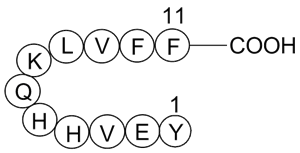
Earlier studies revealed an interaction between HSP90β and ACK1 [15]. In the proteomic approach, we show that ACK1 associates with HSP90α and HSP90β. Additionally, we confirm the existence of a HSP90-ACK1 complex with co-IP experiments. We further analysed whether an inhibition of HSP90 affected the
-
The indirect effect of corporate
2024-03-19
The indirect effect of corporate taxation, as given by the second term in Eq. (18), consists of two elements; (i) a standard 14613 effect (τ/n2), and (ii) a capital cost effect (rG(1−αt)/(1−t)). With a CRS technology, the cost effect vanishes, whereas with an IRS (a DRS) technology the cost effect s
-
The cellular mechanism underlying the CGS
2024-03-18
The cellular mechanism underlying the CGS12066-mediated inhibition of glutamate release from hippocampal nerve terminals through presynaptic 5-HT1B receptors remains to be elucidated. 5-HT1B receptors are coupled to PTX-sensitive G proteins (Gi or Go) that have been shown to inhibit AC activity as w
-
The observation that vortioxetine blocks HT induced
2024-03-18
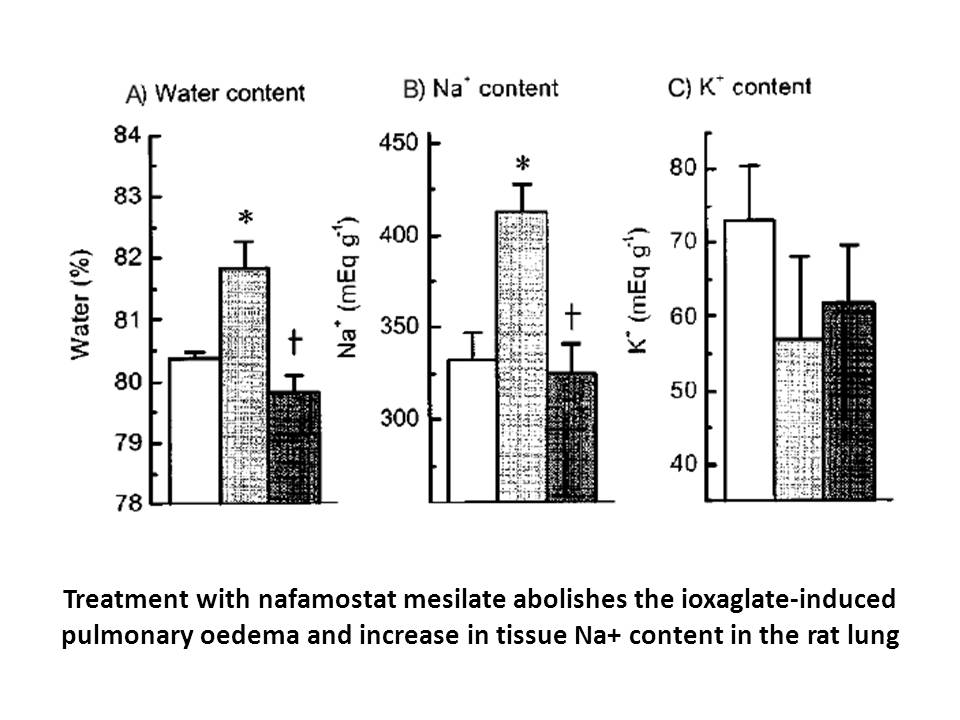
The observation that vortioxetine blocks 5-HT-induced currents in 5-HT3 receptor-expressing oocytes suggests that vortioxetine acts to functionally antagonize these receptors, and is in line with previously published data (Bang-Andersen et al., 2011). For example, Mørk et al. (2012) demonstrated tha
-
The introduction of a pyrazole moiety into any position of
2024-03-18
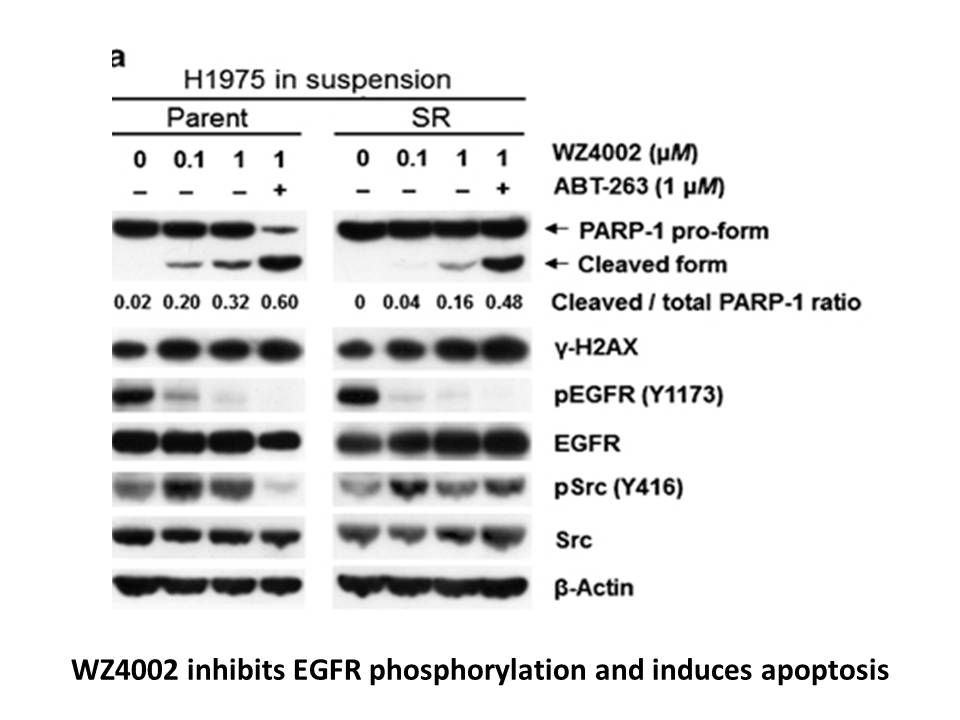
The introduction of a pyrazole moiety into any position of the sterane core by cross-coupling reactions [13] or by Knorr construction from a CCC bis-electrophilic sterane precursor and an N,N binucleophile building block [17], [19] may serve as an example. Very few reports are to be found, however,
-
In clinical studies BA has been
2024-03-18
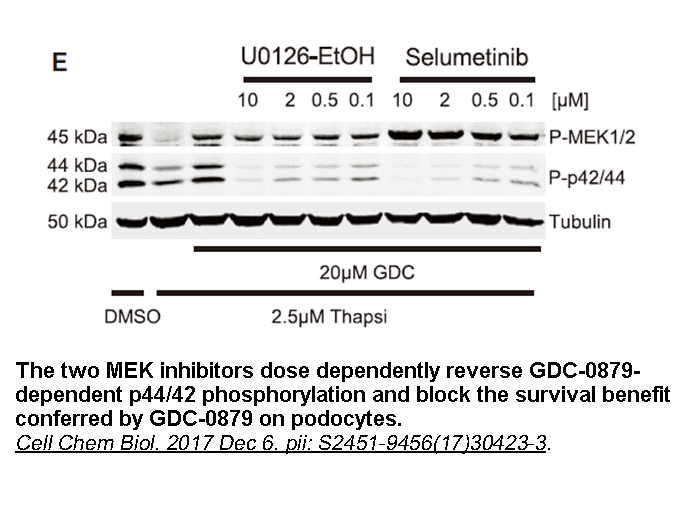
In clinical studies, BA has been reported to promote dose-dependent LDL-C lowering effects of up to 30% as monotherapy, and up to an additional 24% when added in combination with stable statin therapy, or approximately 50% when combined with ezetimibe 109, 110, 111, 112. These effects were accompani
-
Chromatin proteins play important roles in gene expression
2024-03-18
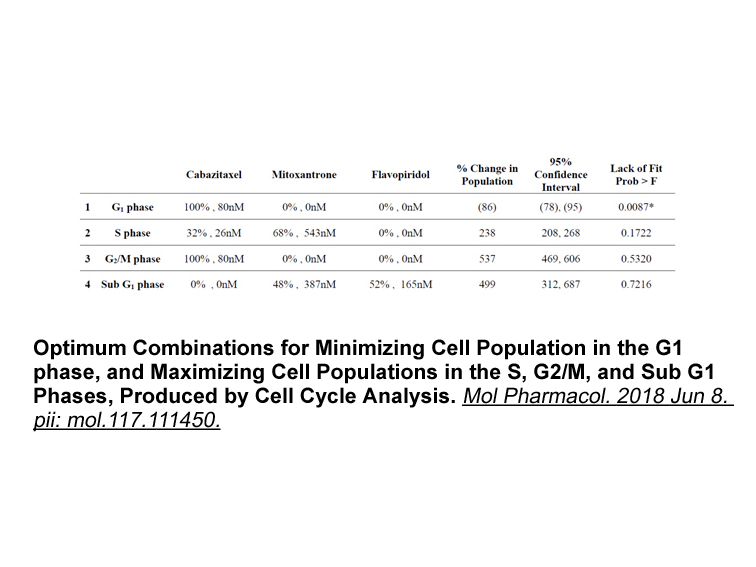
Chromatin proteins play important roles in gene expression and DNA repair. The importance of chromatin composition on gene expression is exemplified by X-inactivation, where one of the two X chromosomes in female mammalian Pyoluteorin synthesis is transcriptionally silenced by heterochromatin , , ,
-
Although the LB domains of mGlu
2024-03-18
Although the LB2 domains of mGlu receptors have not been shown to form an extensive interface during activation, they do draw closer to each other, as demonstrated in crystal structures (Kunishima et al., 2000, Muto et al., 2007, Tsuchiya et al., 2002) and by FRET analysis (Doumazane et al., 2013, V
-
XMD17-109 Functional enhancers are often composed of binding
2024-03-18
Functional enhancers are often composed of binding motifs of multiple key transcription factors to confer spatial and temporal regulation of genes in a certain context. In the uterus, the difference between the number of genes that have associated PGR occupancy and that of progesterone responsive ge
16140 records 198/1076 page Previous Next First page 上5页 196197198199200 下5页 Last page